Software Defined Aircraft

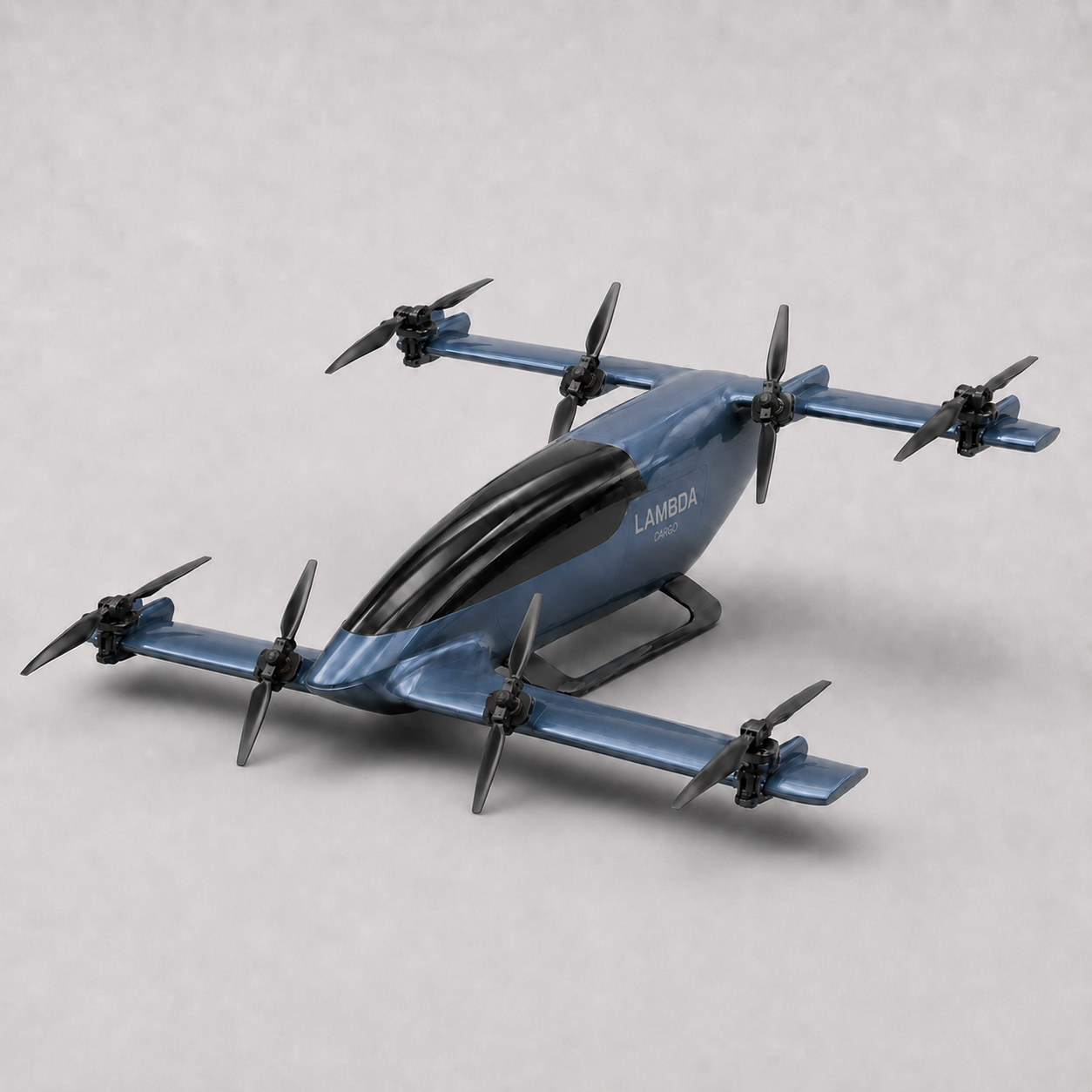
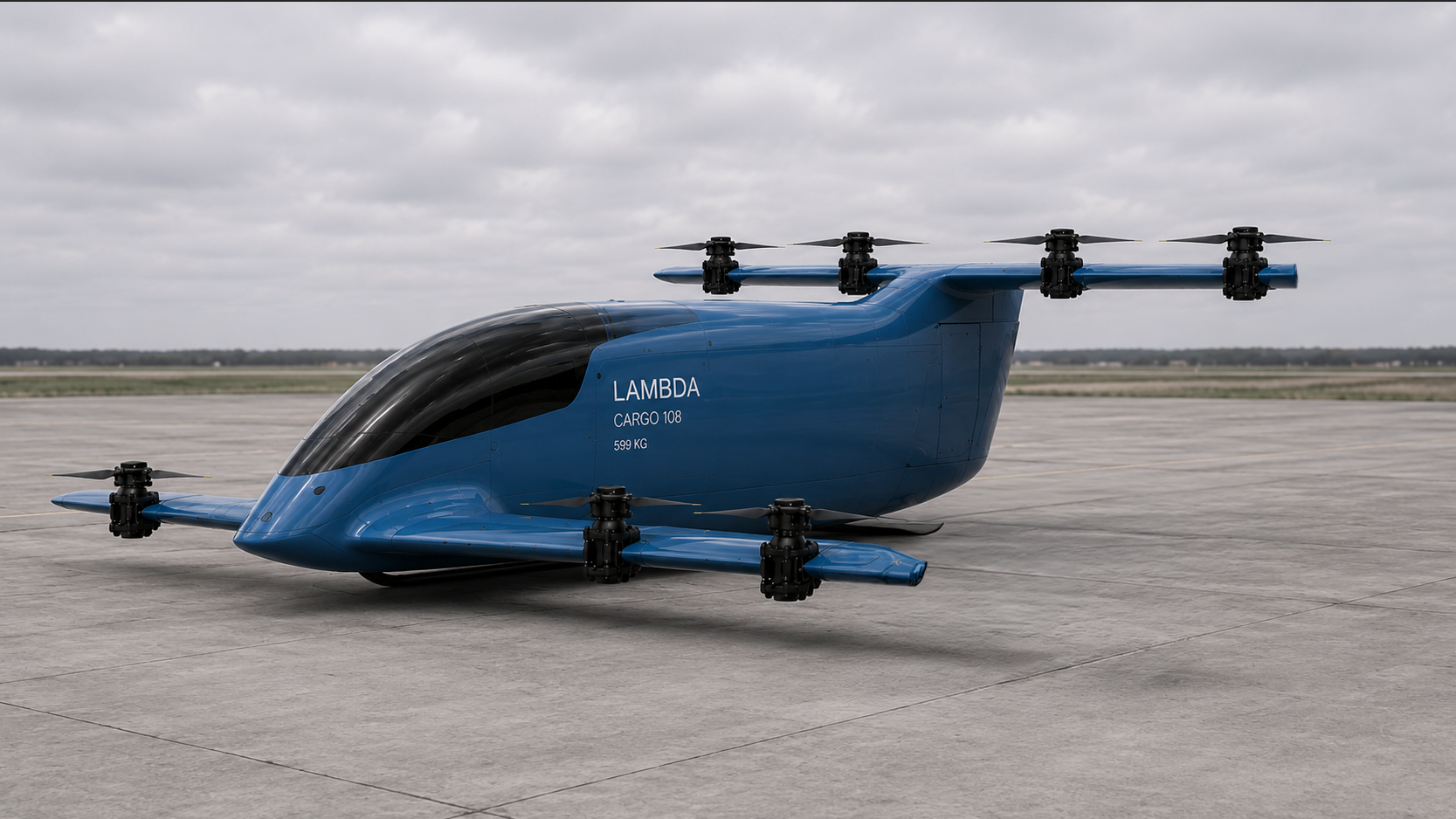
The simplest aircraft, software-defined aircraft Lambda.

Fewer parts. Lower cost. From cargo to people.

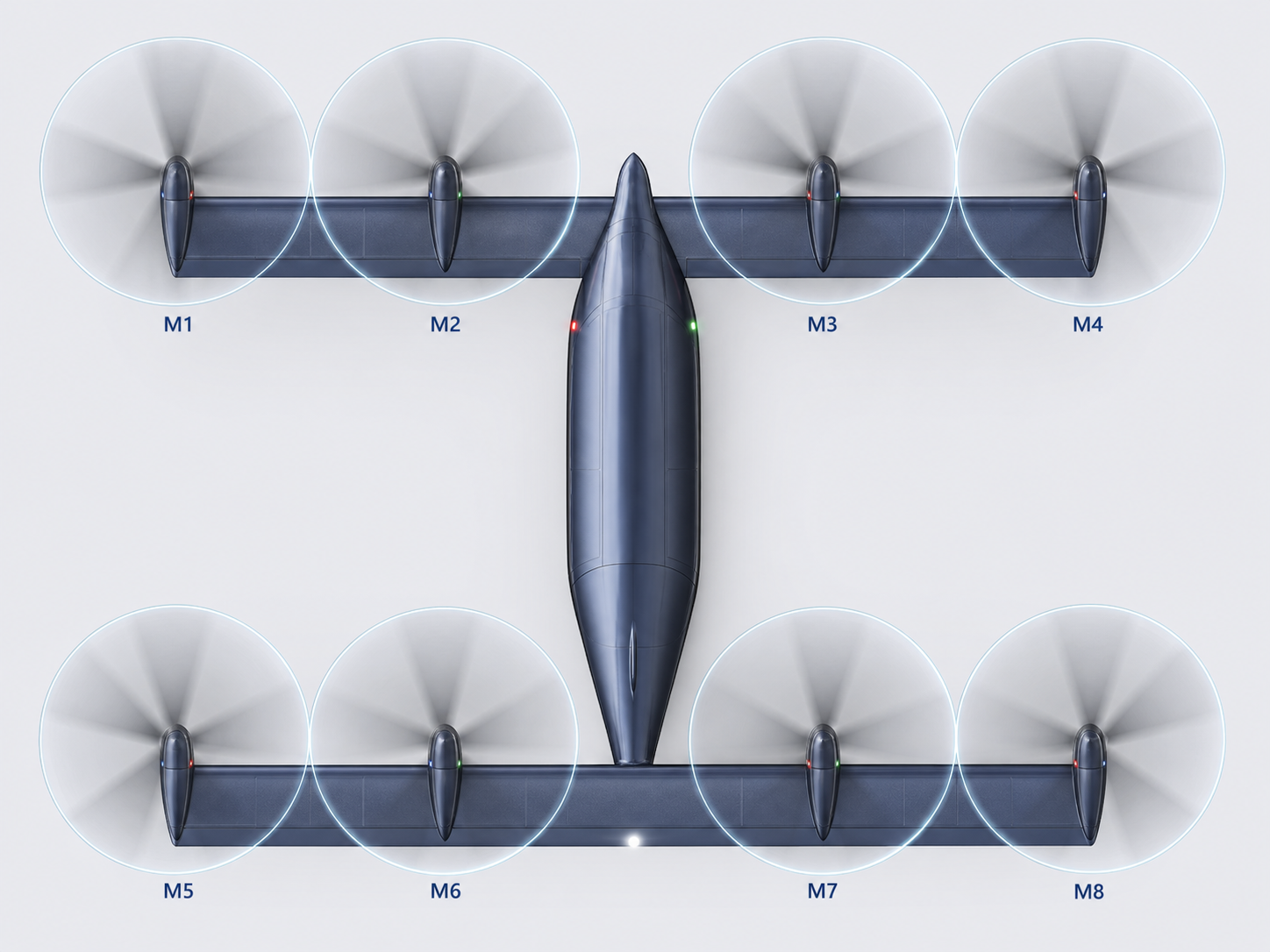
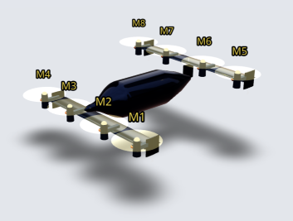
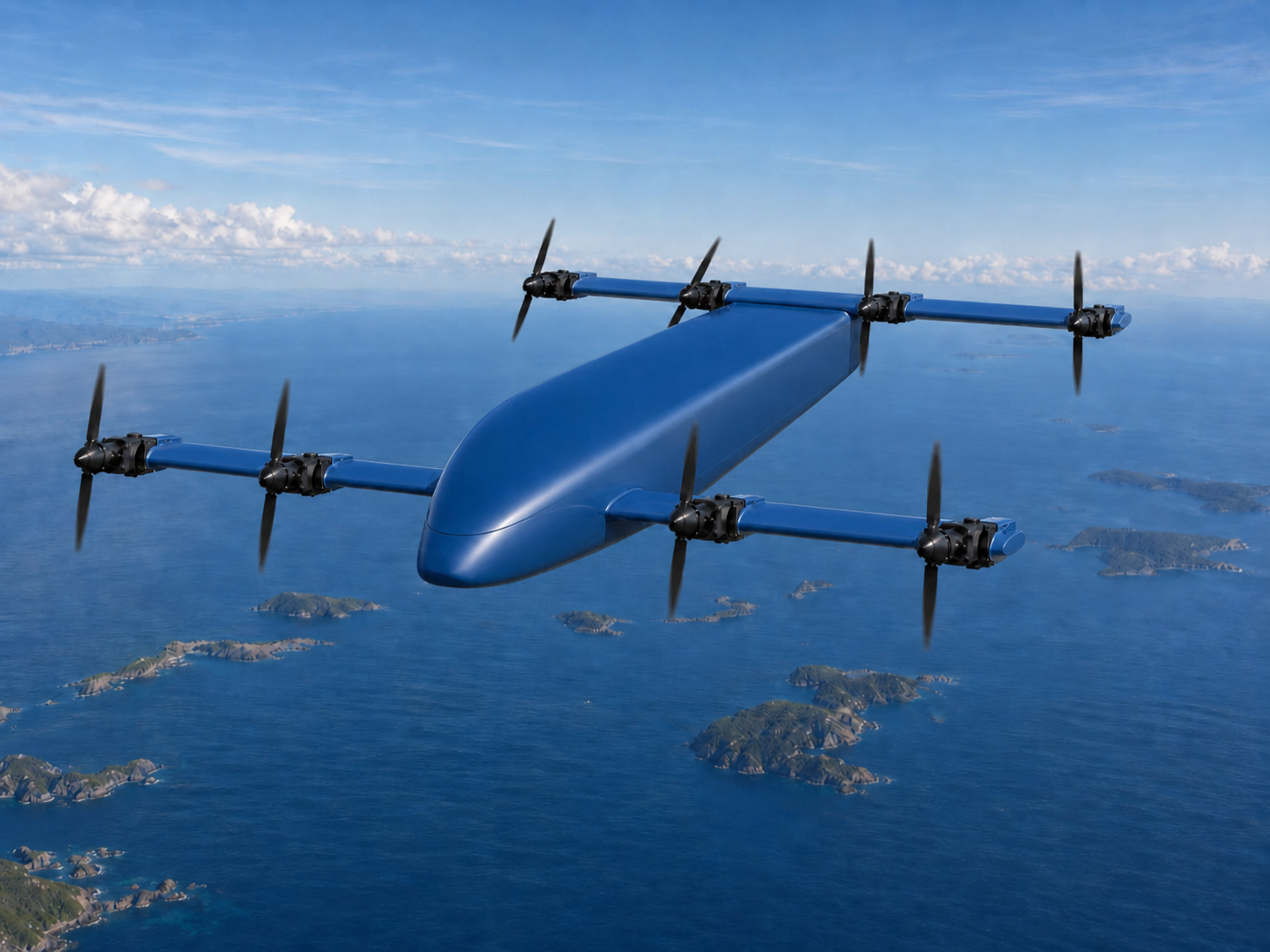
SDA eight-rotor top layout
Technology

Software defines the aircraft

An Aircraft With Fewer Moving Wing Parts

When moving wing parts are removed, wing and fuselage production can move toward automated manufacturing. The target is to bring aircraft cost down to one-tenth of conventional aircraft.

When moving wing parts disappear, maintenance items disappear with them.

Flight Mode Transition Architecture

Software determines attitude and flight-mode transition across hover, transition, cruise, and glide.

One Flight OS switches among multicopter, airplane, helicopter, and gyrocopter flight modes.

Control Does Not Stop When the Engines Stop

Unpowered glide directly satisfies the controlled emergency landing requirement of FAA AC 21.17-4. Even when propulsion is lost, autorotation and differential drag preserve directional control authority.

Cargo operation data becomes a demonstration asset that opens the certification path for crewed charter aircraft.
Why It Is Different

Simplicity · Economics · Safety — from one patented structure

SDA Platform

The key metrics are explained through operating cost and the first market.

Busan-Fukuoka in 59 minutes · 500 kg cargo · target aircraft cost at one-tenth of conventional aircraft. The first market is regional air logistics competing with truck freight rates.

Simple

By reducing moving control surfaces, Lambda reduces parts, failure points, certification items, and manufacturing processes at the same time.

Reducing parts lowers maintenance cost and manufacturing difficulty at the same time.

Economic

The target aircraft cost of one-tenth, 500 kg repeated operations, and the Busan-Fukuoka 59-minute example all point to the same cost structure.

The market opens only when air logistics can compete with truck freight rates.

Safe

Even when power is lost, the aircraft is designed to manage direction and trajectory through autorotation and differential drag.

Unpowered glide and emergency descent are core safety structures for expansion into crewed flight.
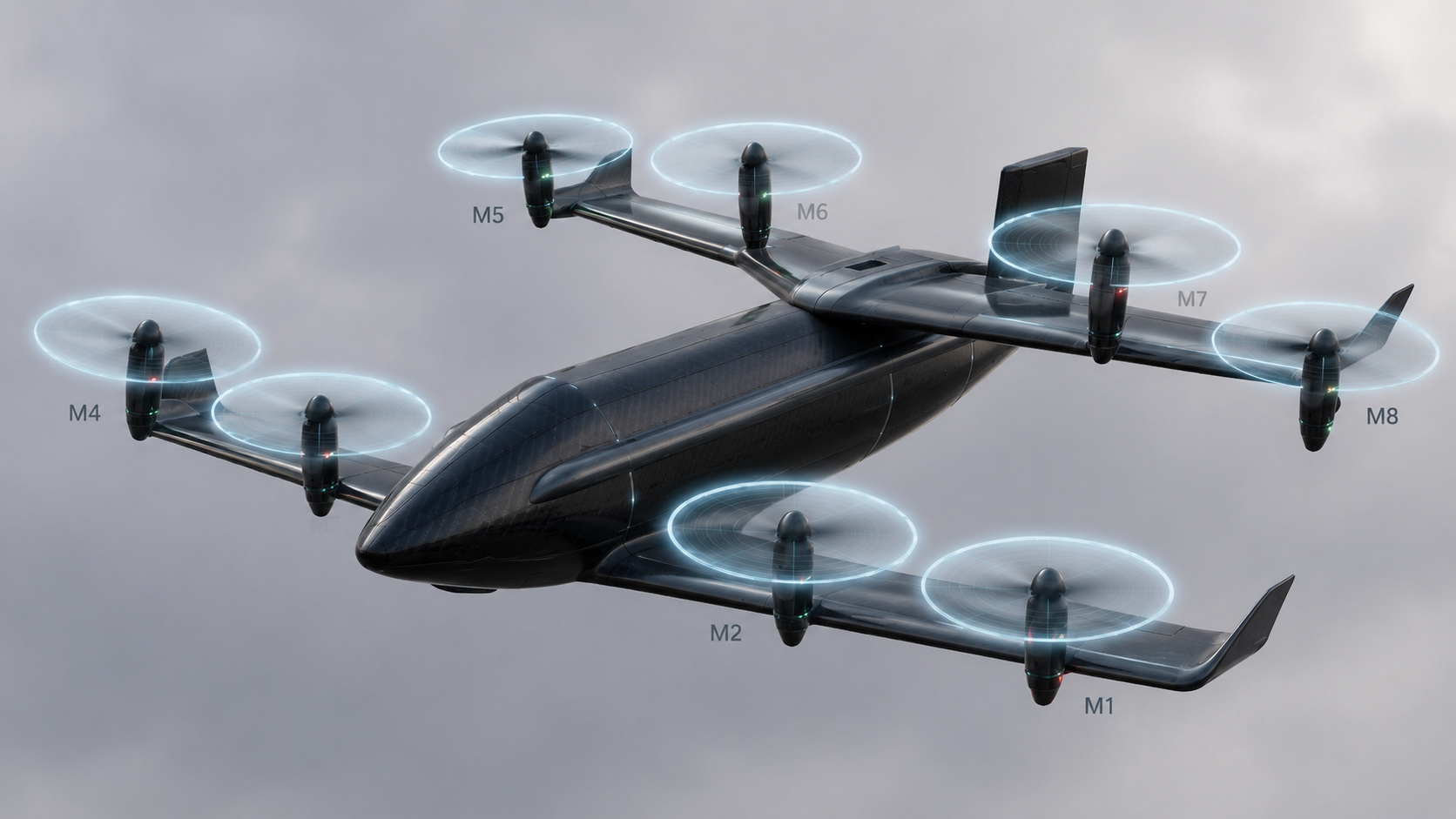
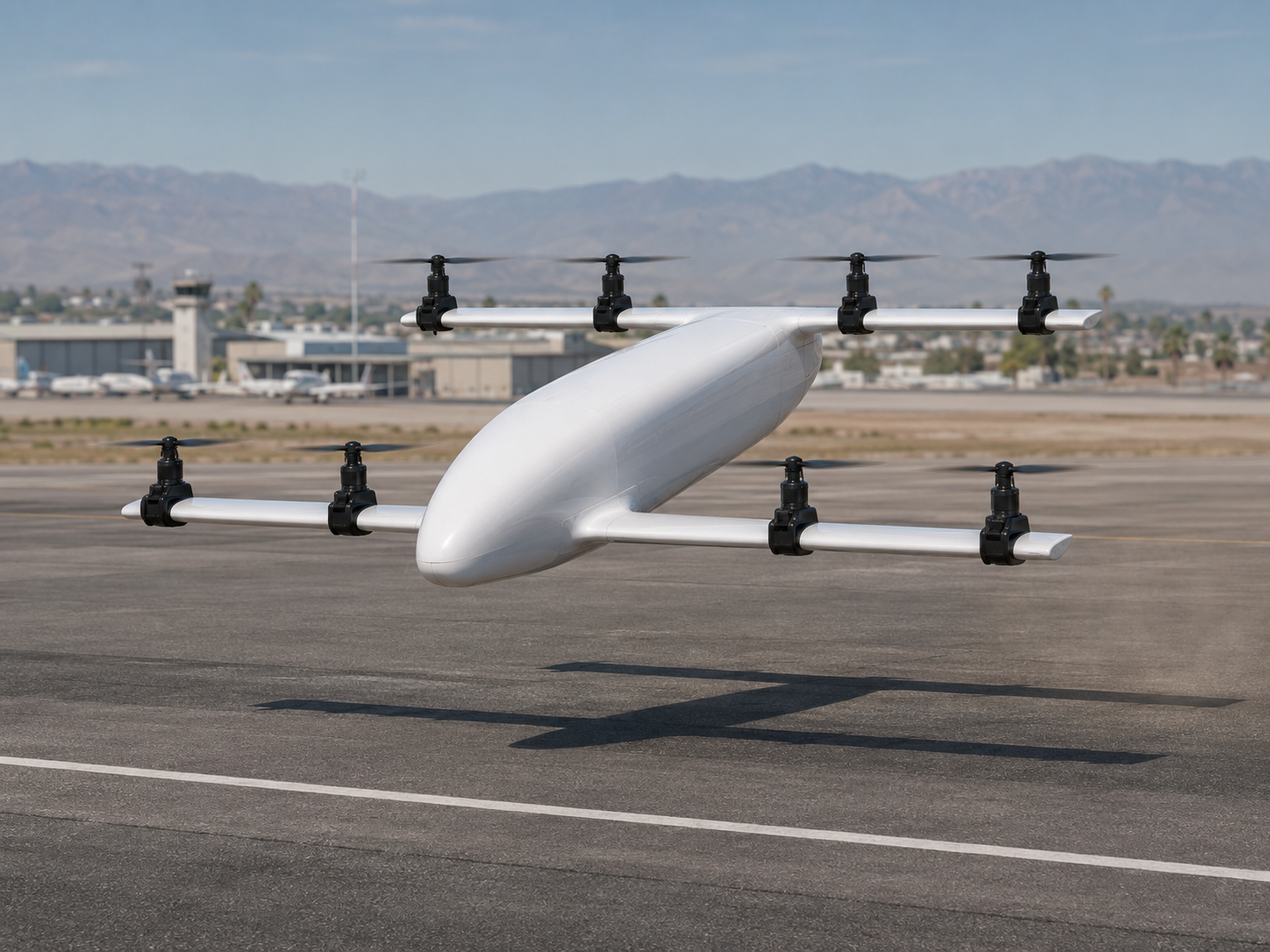
SDA asynchronous tiltrotor flight image
Flight Visual

Asynchronous Tiltrotor Transition Flight

Hover takeoff and landing, transition, cruise, and emergency descent. One aircraft performs all four.

Technology

Operating Conditions Decide the Airframe

Operations Come First

Payload, distance, takeoff and landing space, arrival time, failure behavior, and cost per trip come first.

The airframe comes next.

Deterministic Flight

Mode-aware control keeps flight behavior within defined boundaries, makes it repeatable, and makes it explainable through operation logs and test data.

The core of SDA is not black-box autonomy, but determinism that can be submitted to certification authorities.

Mission Hardware

VTOL access, long-range cruise, repeated cargo operations, and low maintenance are not separate features. They are one design problem that creates the same operating cost structure.

The airframe is shaped by the route and the cargo.

Protected Architecture

Simulation, control, airframe, safety behavior, and IP are developed together to lower aircraft cost, maintenance cost, and improve utilization at the same time.

IP is not paperwork. It is the barrier that protects operating cost.
View Full Technology
IP

A network of 25 patents protects safe operation and cost structure

Lambda IP protects hover takeoff and landing access, deterministic flight, fixed-pitch low-maintenance rotors, a no-control-surface airframe, unpowered glide, and differential-drag control as one architecture.

  • Safe VTOLAsynchronous tiltrotor architecture
  • Simpler AirframeFixed-wing structure without control surfaces
  • Lower BurdenFewer moving parts, clearer safety behavior

Asynchronous Tiltrotor

Safe VTOL

A propulsion architecture that satisfies both point access and mid-mile cruise efficiency.

Deterministic Flight

Mode-Aware Control

Flight modes stay within defined boundaries, are repeatable, and can be proven through operation logs.

Aircraft Without Control Surfaces

Manufacturable Airframe Structure

Removing moving wing parts reduces mechanical complexity and maintenance items at the same time.

Autorotation-Aware Safety

Lower Certification Barrier

Even in propulsion-loss scenarios, the aircraft is designed to switch into autorotation and glide modes and perform controlled descent using rotor-by-rotor drag differences.

Unpowered Glide Control

Operational Resilience

Even when propulsion is lost, the aircraft manages attitude and trajectory through its own glide performance and rotor-by-rotor differential drag.

Aircraft Unit Cost

No-control-surface structure

The simple airframe structure dramatically lowers aircraft cost.

Maintenance Burden

Minimized Moving Parts

Minimizing moving wing parts and mechanical elements reduces inspection, replacement, service items, and maintenance burden.

Certification Barrier

Deterministic, Safety-Aware Behavior

Predictable and repeatable flight behavior creates a certification structure where safety can be demonstrated.

Operating Model

Leasing, Fleet Operations, SaaS

Beyond simple aircraft sales, it evolves into an air logistics asset that creates continuing revenue through repeated operation.

Physical AI

Starting from aircraft, expanding into Physical AI that moves real machines

The method of defining machines from operating conditions does not end in the air.

The same loop that moves Lambda also applies to humanoids and autonomous machines. Define the mission, simulate the motion, close the control loop, and design the machine for its operating conditions.

SDA is the first proof. Behind it is Physical AI that moves logistics, manufacturing, and maintenance sites.

If you want to discuss technical collaboration
contact us.

Aircraft structure, Flight OS, operating corridors, IP licensing. Collaboration can begin from any point.

Lambda begins with air logistics. The bigger picture is mission-defined machines for the physical world.

Receivepower
SDA, Physical AI, and mission-defined machine architecture.
Company

Receivepower

Receivepower has been building intelligent robots since 2019. From walking humanoids to flying robots, we build machines moved by Physical AI.

Mission

We design the flying car as a real aircraft.

Lambda SDA is a VTOL aviation platform that combines automotive-level cost structure with software-defined flight.

View Development Narrative
Patent Foundation

We began with the asynchronous tiltrotor patent.

In 2020, we filed and completed registration for a patent on the asynchronous tiltrotor structure. It was designed for hover takeoff and landing safety and operating cost at one-tenth of conventional aircraft.

Development Narrative

Flying Car: From Dream to Reality

Everyone dreams of a flying car at least once. We did too. We believed the tiltrotor would be the aircraft that could make that dream real. But in 1992, watching the crash of the Osprey V-22 left us with one question: if an aircraft is to fly above cities where people live, does it not need a much safer tiltrotor?

An Old Dream, Three Barriers

For that dream to become urban transportation, three things had to be solved together: take off and land in place, fly far, and move safely between those two flight states. Until now, no aircraft had all three together.

The Possibility of the Lambda Engine

It began with calculation. In 2006, looking at Korea's independently developed automotive engine Lambda, we asked whether this engine could become an aircraft. Counting seats from engine weight and output gave an answer: Gamma for two seats, Lambda for three. On paper, flying with automotive parts was already possible.

The Invention of the Asynchronous Tiltrotor

The remaining problem was safety. We drew and erased more than 200 forms of hover takeoff and landing aircraft. At the end of that process, we reached a structure where rotors tilt independently, one by one: the asynchronous tiltrotor. We filed the patent in 2020.

After that, the company’s time went into humanoid robot development. The aircraft was folded away in a drawer. One day, while preparing robot mass production, the registration decision for that patent arrived. A forgotten idea returned as a right.

2026, Completion of the SDA Architecture

The registration decision was not a certificate of celebration. It was a question: can this structure really open the sky? Starting from the first patent in 2020, we redesigned a patent network connecting the entire operating process from takeoff to emergency landing. The system completed in 2026 is the SDA architecture: five core technologies and about 25 patents.

An Aircraft That Competes With Truck Freight

SDA will not remain an idea on a drawing. The flying car we dreamed of as children is now preparing to take off as an aircraft that competes with truck freight rates. It begins with cargo. At the end of that path is the day it carries people.

Investor Relations

A repeat-revenue structure created by software-defined aircraft.

It creates a repeat-revenue structure that expands beyond simple aircraft sales into fleet ownership, corridor operating rights, MRO, Flight OS, continuing airworthiness data, and regional JVs.

VC

Certification Schedule

eVTOL certification has remained unfinished for years. We addressed certification requirements at the design stage.

What matters is certification. Transparent certification scheduling is not impossible.

The reason eVTOL valuations fluctuate is simple: no one can fix the certification schedule. The market reads this not as technology, but as the risk of not knowing how much more capital will burn.

eVTOL aircraft must pass two FAA requirements.

  • Deterministic control: DO-178C
  • Unpowered emergency landing: FAA AC 21.17-4, PL.2105(g)

We designed the aircraft to satisfy these requirements from the design stage.

1. It responds only as defined (DO-178C)

Conventional aircraft respond to gusts through real-time computation, so outcomes cannot be predicted 100% in advance. Our aircraft precomputes the answers to defined situations and switches instantly, so the outcome can be shown to certification authorities before flight.

2. It can be controlled and landed even when the engines stop (PL.2105(g))

Even when the engines stop, control does not stop. Even in the extreme case of total power loss, the eight rotors create differences in air resistance, or differential drag, to form virtual control surfaces. SDA is designed as a fail-safe aircraft that can control direction and trajectory through glide landing without propulsion, directly addressing PL.2105(g).

3. Certification-critical parts drop toward one-hundredth

Conventional aircraft have hundreds of failure points because of control surfaces and actuators, and each must be proven. We removed mechanical control surfaces themselves, dramatically reducing the parts that must be certified.

4. Cargo builds trust before people

Instead of spending capital first on crewed-aircraft certification, we accumulate large volumes of real flight data through cargo operations. Safe operation records are stronger than paperwork and accelerate later crewed-aircraft certification.

In conclusion, we simplified computation, reduced parts, and solved emergency response through design. Certification is no longer unpredictable R&D. It becomes a procedure that executes a defined sequence.

↑ Back to Index
Individual Deep-Tech Audience

Technology That Redesigns the Sky

Receivepower designs the expansion path of software-defined aircraft through AI and robotics. From aircraft structure to control, production, and operation, we rewrite the core structure so aviation can operate more efficiently and accessibly.

If you are interested in deep tech, you can connect with the vision and scalability of the technology we are building. Guidance on individual investment participation will be provided separately when ready.

↑ Back to Index
100 million KRW

This is the initial asset unit from an investor perspective. A 100 million KRW-class aircraft expands into fleets, corridor operating rights, MRO, and Flight OS revenue.

5 billion KRW

From an IR perspective, the core is not aircraft sales but lifetime operating revenue. As repeated operation data accumulates, the foundation for certification, insurance, maintenance, and software revenue grows.

50%

In investment judgment, utilization and margin durability matter more than manufacturing cost. The low-maintenance structure and Flight OS defend fleet profitability.

Initial Entry Market

Routes where missing a ship costs a day and returning to the road costs half a day: that lost time is Lambda’s initial market.

Investment Structure

It expands into a fleet/JV structure combining corridor operating rights, local assembly, MRO, data accumulation, and Flight OS subscriptions.

Investment Logic

We design fleet infrastructure and recurring software revenue together.

Lambda combines fleet ownership, leasing, corridor operation, logistics SLA, continuing airworthiness data, and Flight OS subscriptions into a repeat-revenue structure.

Why Now

When air logistics cost falls to truck level, the logistics map is redrawn not along roads but as direct lines to destinations.

Straight-line distance becomes the new standard for logistics network design. The 500 kg-class payload and up to 1,000 km range target aerial mid-mile logistics networks.

Technology

Robotics Technology

Receivepower works on Physical AI technologies that move real machines. Robot middleware, industrial control, coordinate systems, sensor fusion, virtual space, vision, manipulation, contact control, AI models, workcells, factory data, safety, and engineering systems are connected into one execution system.

Physical AI

AI That Moves in the Physical World

Control intelligence that reads state through cameras and sensors, predicts failure possibility, and lets real machines choose their next action.

Robot Middleware

Robot Middleware

The execution foundation that lets sensors, motors, controllers, simulators, and AI models exchange data.

Industrial Control

Industrial Control

It connects proven control systems such as PLC, CAN, EtherCAT, and safety relays to real equipment in factories and machines.

Coordinate System

Coordinate System

It aligns the robot body, hand, camera, workpiece, and spatial reference points into one mathematical positional relationship.

Sensor Fusion

Sensor Fusion

It fuses signals from cameras, IMUs, encoders, current, and force sensors to reliably determine the machine’s current state.

Virtual Space

Virtual Space

Digital twins and simulation verify motion, collision, and failure conditions before real equipment is built.

Vision

Vision

Object detection, segmentation, pose estimation, and inspection structure the targets that robots must see and judge.

Manipulation

Manipulation

It designs real object-handling actions such as grasping, placing, insertion, alignment, and stacking.

Contact Control

Contact Control

It reads force, torque, slip, and pressure so robots can interact delicately with objects and environments without harmful collision.

AI Model

AI Model

Vision models, behavior policies, anomaly detection, and imitation learning train robot judgment and action selection.

Workcell

Workcell

A real work unit where robot arms, mobile robots, grippers, cameras, lighting, jigs, and conveyors work together.

Factory Data

Factory Data

Production count, cycle time, fault history, inspection results, and quality data are collected for operational judgment and improvement.

Safety

Safe

Emergency stops, safety zones, speed limits, collision detection, and recovery procedures create the conditions for people and equipment to work together.

Engineering System

Engineering System

Requirements, interfaces, state machines, tests, and validation reports turn machine development into a repeatable process.

Robotics Technology

Robot Middleware

  • ROS
  • ROS 2
  • DDS
  • Node Graph
  • Topic
  • Service
  • Action
  • TF Tree
  • URDF
  • SRDF
  • MoveIt
  • Nav2
  • Gazebo
  • Isaac Sim
  • MAVROS
  • Robot State Publisher
  • Joint State Publisher
  • Controller Manager
  • Hardware Interface
  • Real-Time Control Loop
Robotics Technology

Industrial Control

  • PLC
  • Ladder Logic
  • Structured Text
  • Modbus TCP
  • Modbus RTU
  • EtherCAT
  • Ethernet/IP
  • PROFINET
  • CAN
  • CANopen
  • Digital I/O
  • Analog I/O
  • Relay Output
  • Safety Relay
  • Emergency Stop
  • Interlock
  • Watchdog
  • Heartbeat Signal
  • Machine State
  • Fault Code
  • Reset Sequence
Robotics Technology

Coordinate System

  • World Frame
  • Map Frame
  • Base Frame
  • Tool Frame
  • Camera Frame
  • Gripper Frame
  • Workpiece Frame
  • Fixture Frame
  • Conveyor Frame
  • Calibration Frame
  • Homogeneous Transform
  • Rotation Matrix
  • Quaternion
  • Euler Angle
  • Pose Estimation
  • Hand-Eye Calibration
  • Extrinsic Calibration
  • Intrinsic Calibration
  • Coordinate Registration
  • Frame Alignment
Robotics Technology

Sensor Fusion

  • Camera
  • Depth Camera
  • Stereo Camera
  • IMU
  • Encoder
  • Load Cell
  • Force Torque Sensor
  • Proximity Sensor
  • Limit Switch
  • Motor Current
  • Torque Estimate
  • PLC State
  • Time Synchronization
  • Signal Filtering
  • Kalman Filter
  • Extended Kalman Filter
  • Particle Filter
  • Complementary Filter
  • State Estimation
  • Outlier Rejection
  • Sensor Confidence
  • Multi-Rate Sampling
Robotics Technology

Virtual Space

  • Digital Twin
  • Simulation Scene
  • OpenUSD
  • Physics Engine
  • Renderer
  • Robot Model
  • Factory Layout
  • Workcell Layout
  • Collision Mesh
  • Kinematic Model
  • Dynamic Model
  • Sensor Model
  • Synthetic Data
  • Domain Randomization
  • Scenario Generation
  • Motion Replay
  • Failure Replay
  • Real-to-Sim
  • Sim-to-Real
  • Virtual Commissioning
  • Process Simulation
Robotics Technology

Vision

  • Object Detection
  • Instance Segmentation
  • Semantic Segmentation
  • SAM2
  • YOLO
  • Mask R-CNN
  • Keypoint Detection
  • Edge Detection
  • Pose Estimation
  • Depth Estimation
  • Visual Servoing
  • Marker Tracking
  • AprilTag
  • ArUco
  • OCR
  • Defect Detection
  • Surface Inspection
  • Part Presence
  • Position Verification
  • Orientation Verification
Robotics Technology

Manipulation

  • Grasp Planning
  • Grasp Pose
  • Approach Vector
  • Tool Center Point
  • Inverse Kinematics
  • Motion Planning
  • Trajectory Generation
  • Path Constraint
  • Collision Avoidance
  • Pick and Place
  • Insertion
  • Alignment
  • Sorting
  • Stacking
  • Palletizing
  • Bin Picking
  • Tool Changing
  • Gripper Control
  • End-Effector Design
  • Affordance Map
  • Task Primitive
Robotics Technology

Force / Contact

  • Force Control
  • Impedance Control
  • Admittance Control
  • Compliance Control
  • Contact Detection
  • Slip Detection
  • Pressing Force
  • Insertion Force
  • Load Threshold
  • Overload Detection
  • Current Limit
  • Torque Limit
  • Soft Stop
  • Hard Stop
  • Retraction Motion
  • Recovery Motion
  • Force Feedback
  • Contact State
  • Pressure Profile
  • Z-Axis Control
Robotics Technology

AI Model

  • Vision Model
  • Segmentation Model
  • Detection Model
  • Pose Model
  • Anomaly Detection
  • VAE
  • Diffusion Policy
  • Behavior Cloning
  • Reinforcement Learning
  • Imitation Learning
  • Policy Learning
  • Trajectory Model
  • Latent Space
  • Feature Embedding
  • Few-Shot Adaptation
  • Human-in-the-Loop
  • Active Learning
  • Dataset Curation
  • Annotation Pipeline
  • Model Evaluation
Robotics Technology

Workcell

  • Robot Arm
  • Mobile Robot
  • AMR
  • AGV
  • Humanoid
  • Gripper
  • End-Effector
  • Camera Mount
  • Lighting
  • Fixture
  • Jig
  • Conveyor
  • Feeder
  • Tray
  • Pallet
  • Inspection Station
  • Reject Station
  • HMI
  • Operator Panel
  • Safety Zone
  • Work Envelope
Robotics Technology

Factory Data

  • MQTT
  • OPC UA
  • REST API
  • WebSocket
  • Message Broker
  • Event Log
  • Telemetry
  • Time-Series Data
  • Production Count
  • Cycle Time
  • Takt Time
  • Downtime
  • Fault History
  • Inspection Result
  • Process Parameter
  • Quality Data
  • Traceability
  • Dashboard
  • Alert
  • Report
Robotics Technology

Safety

  • Emergency Stop
  • Safety PLC
  • Safety Zone
  • Light Curtain
  • Area Scanner
  • Door Interlock
  • Torque Limit
  • Speed Limit
  • Workspace Limit
  • Collision Check
  • Fault Detection
  • Safe Stop
  • Protective Stop
  • Manual Mode
  • Auto Mode
  • Teach Mode
  • Recovery Mode
  • Restart Condition
  • Operator Confirmation
  • Audit Log
Robotics Technology

Engineering System

  • Task Definition
  • Requirement Spec
  • Interface Spec
  • I/O Map
  • State Machine
  • Sequence Diagram
  • Failure Mode
  • Acceptance Criteria
  • Test Case
  • Simulation Test
  • Hardware Test
  • Regression Test
  • Version Control
  • Naming Rule
  • Component Registry
  • API Contract
  • RAG Rulebase
  • Agent Workflow
  • Review Protocol
  • Validation Report
Patent Portfolio

Five core technologies change the cost and safety structure.

Receivepower IP simplifies the aircraft structure, creates predictable safety behavior in emergencies, and lowers the cost of repeated operation.

How to Read the IP

Receivepower IP should be read through structural change and operating effect, not only by technology names. Each moat directly shapes aircraft price, maintenance cost, utilization, and safety in the order of configuration, change, and effect.

  • EconomicReducing mechanical parts, production steps, and maintenance items
  • SafetyFixing transition, failure, power loss, and state awareness into a provable structure
Registered

1. Independently Controlled Tilting Propulsors

Instead of moving every propulsor to the same angle at once, this structure separates thrust and lift during transition.

  • ConfigurationIndependent tilting by propulsor and distributed propulsion control
  • ChangeSegmenting the transition from hover flight to fixed-wing cruise
  • EffectVTOL transition stability and crewed-flight scalability
Filed

2. Virtual Control Surface Flight Control

This structure reduces dependence on physical control surfaces, hinges, links, and actuators, and uses propulsor placement and thrust differentials as flight-control resources.

  • ConfigurationUsing distributed propulsor position and phase differences as control resources
  • ChangeReducing moving control surfaces and related mechanical parts
  • EffectLower aircraft cost, fewer maintenance items, and lower production complexity
Filed

3. Discrete Matrix-Based Flight Management System

A deterministic flight management structure that predefines flight and failure states and switches to the control mode for each state.

  • ConfigurationState-specific control matrices and failure-response modes
  • ChangeReplacing black-box decisions with testable control units
  • EffectCertification explainability, operation logs, and failure-response structure
Filed

4. Unpowered High-Lift Control

An independent invention that uses the aircraft’s lift and rotating elements during power loss or low-speed flight to preserve landing margin and directional control.

  • ConfigurationUsing lift, autorotation, and differential drag in unpowered states
  • ChangeSecuring extra time and space in emergencies
  • EffectPower-loss scenarios and emergency-landing safety
Filed

5. SADS-Based Virtual Pitot Tube

An independent invention that estimates the aircraft’s air-state by fusing multiple signals instead of relying on one physical sensor.

  • ConfigurationState estimation based on GNSS, IMU, propulsor data, and sensor fusion
  • ChangeSecuring a secondary channel to understand the aircraft’s current air-state
  • EffectState awareness, mode switching, and control stability

The SDA Architecture Built by Five Technical Moats

  • Truck-Level EconomicsVirtual control surfaces, a no-control-surface structure, and simplified production and maintenance
  • Crewed-Flight SafetyTilting transition, discrete control, unpowered high lift, differential drag, and SADS state estimation form one certification logic
  • SDAAn aircraft architecture that starts from operating conditions and failure scenarios
SDA Visual

Asynchronous Tiltrotor Flight Example

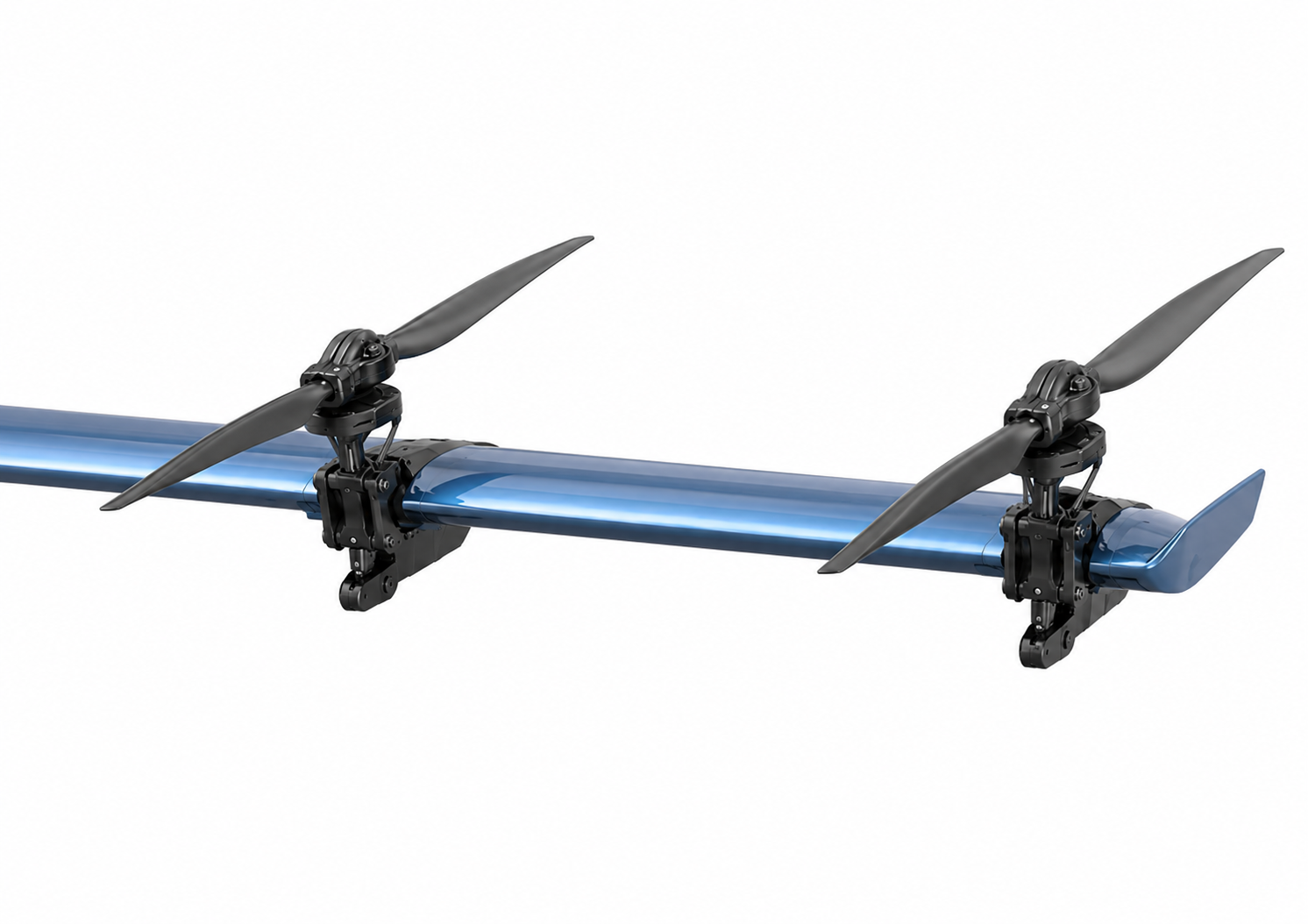
SDA hover takeoff and landing tilting nacelle detail
VTOL

Hover Takeoff and Landing Tilting Nacelle

Every rotor tilts independently.

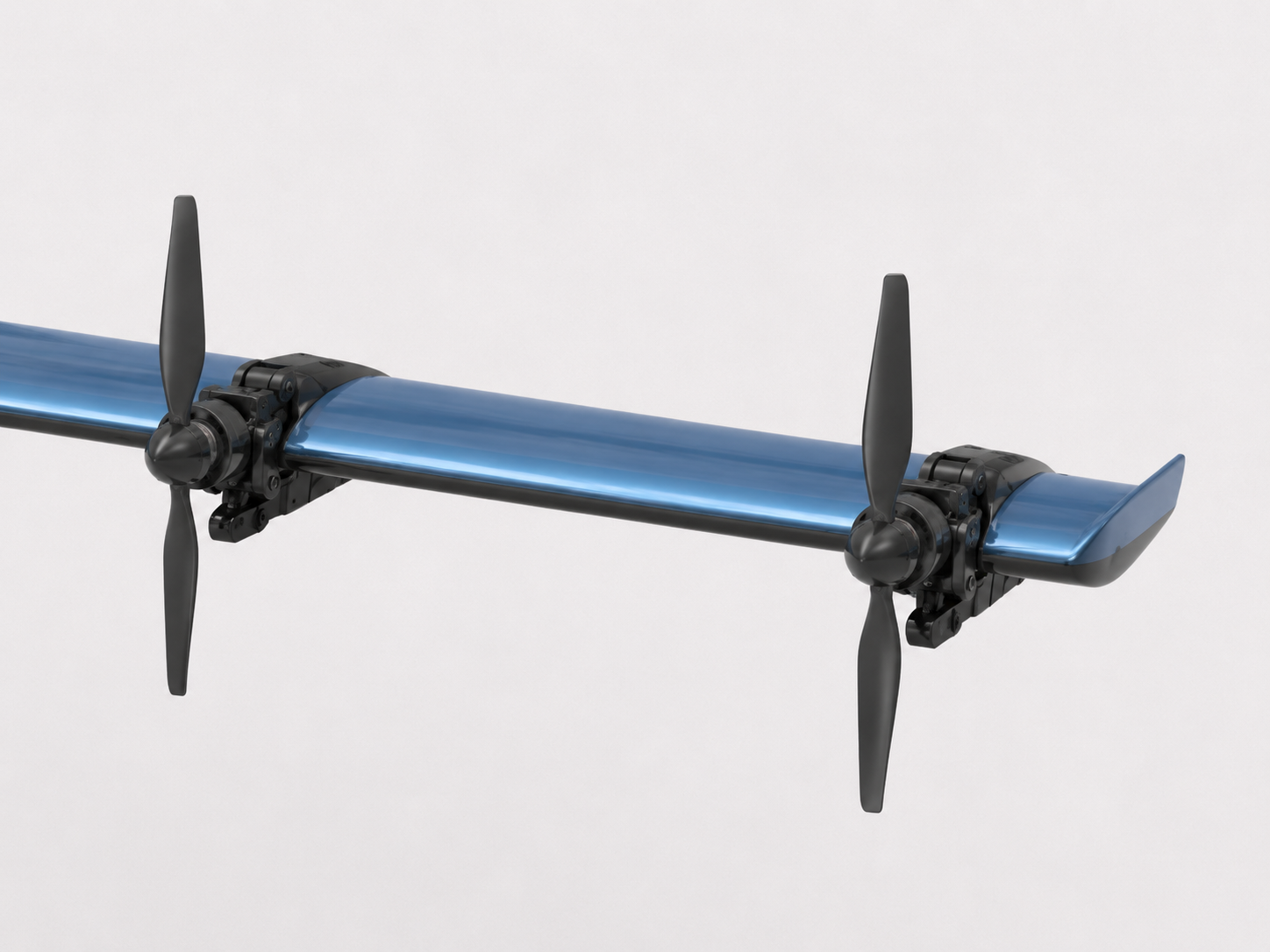
SDA cruise tilting nacelle detail
CRUISE

Fixed-Wing Cruise Transition

Hover thrust devices convert into cruise thrust to secure long-range air logistics efficiency.

SDA top-view propulsor layout image
LAYOUT

Flying Without Control Surfaces

Propulsor placement and differential-thrust control replace moving control surfaces. Stagger-based virtual control surfaces are explained in the detailed technology section.
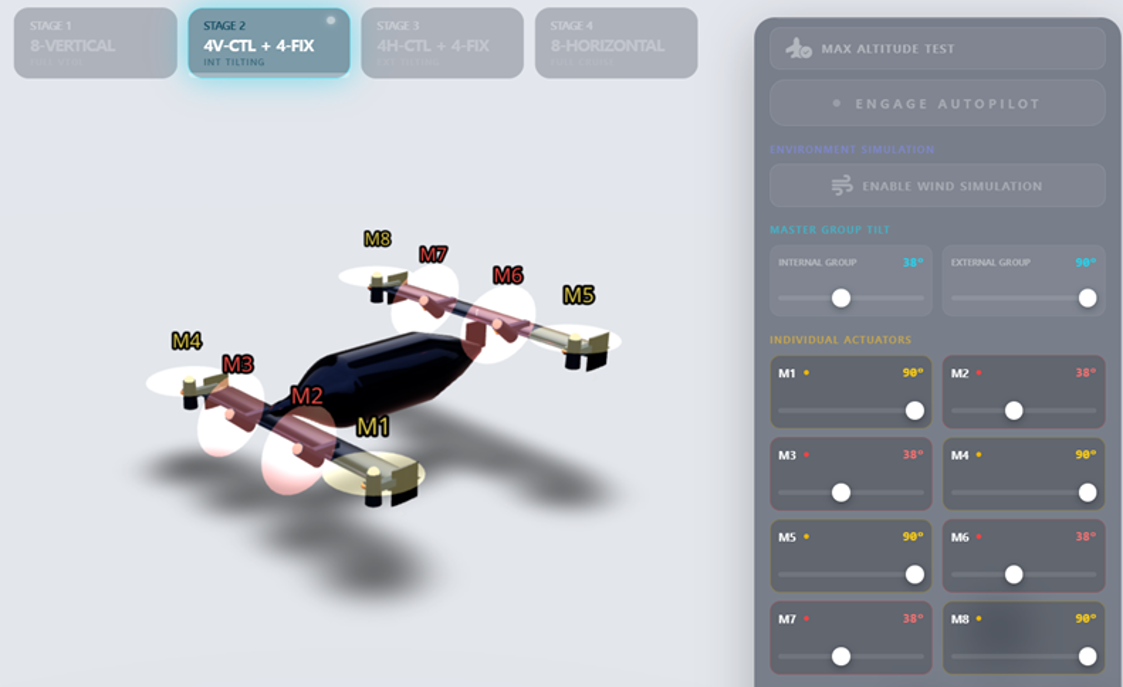
Asynchronous tilting distributed-propulsion SDA control screen
CONTROL LOGIC

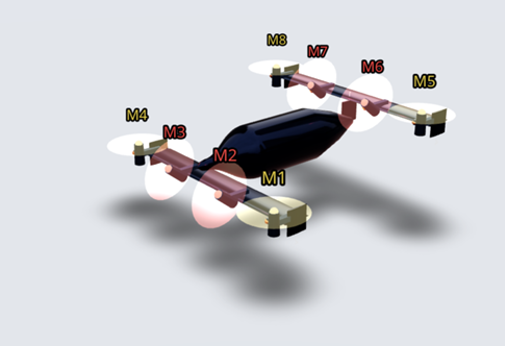
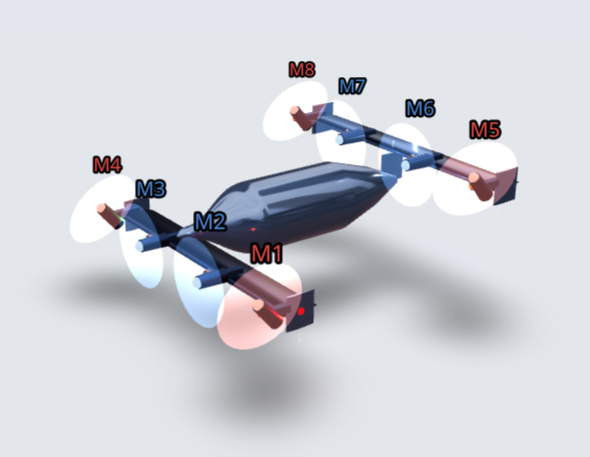
The eight propulsors move differently.

SDA transitions by separating inner and outer propulsor groups, tilting them in stages, and transferring control authority by flight mode.

SDA hover takeoff mode
01

Hover Takeoff

Eight propulsors lift the aircraft with hover thrust.

SDA first tilting stage
02

First Tilting

Some propulsors begin transition first.
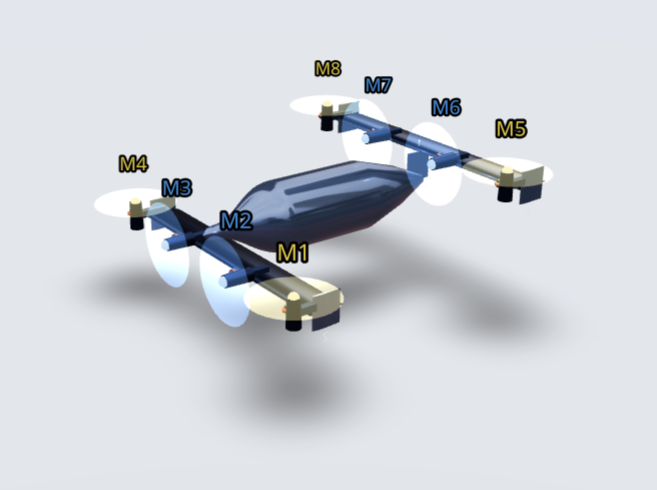
SDA first tilt complete and cruise control authority transfer
03

Control Transfer

Hover thrust and cruise control are handled together.

SDA during second tilting
04

Second Tilting

The remaining propulsors move into the cruise direction.
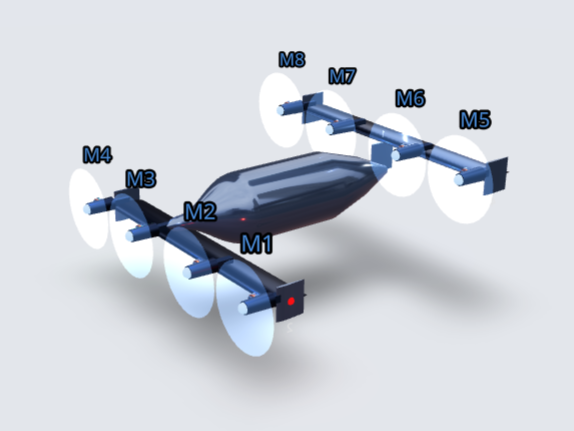
SDA full cruise control authority
05

Cruise Control Authority

After transition, full cruise control authority is secured.
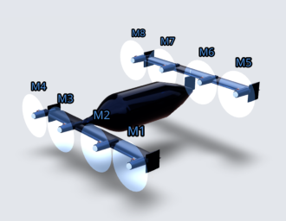
SDA cruise flight
06

Cruise Flight

Fixed-wing cruise secures range and economics.

Product Direction

Cargo-first Aerial Robot.

By removing moving wing parts, reducing parts toward one-hundredth, and turning certification into a procedure, Lambda proves the path first.

Product

Lambda opens the market from cargo corridors as a software-defined aircraft

Routes and cargo come first. The aircraft follows.

Route, payload, arrival time, failure response, and cost per trip come first. The aircraft is designed to satisfy those operating conditions.

The initial target is 100-500 kg cargo operation. From there, cargo operation data and safety architecture expand toward crewed powered-lift and autonomous passenger transport.

Technology Stack

  • Safe VTOLAsynchronous tiltrotor architecture
  • Deterministic FlightMode-aware matrix-based control
  • Simple aircraftFixed-wing structure without control surfaces
  • Safety marginUnpowered glide, autorotation, and differential-drag control
Lambda Prototype 25 kg concept prototype
Core flight-transition demonstrator
  • Class25 kg class
  • Aircraft structureTandem wing with no moving wing parts
  • Wing / Spar3 m-class carbon spar and wing
  • Rotor / TiltEight rotors / all eight tilting
  • Power4.5 kW-class hybrid-electric propulsion

The first class to verify asynchronous tilt, unpowered high-lift devices, virtual pitot, and hybrid power buffer on a real aircraft.

Lambda Light Part 103 Class
Personal, leisure, and technology-demonstration derivative
  • ClassPart 103 class
  • RoleInitial public product
  • UseEarly flight-data accumulation and market validation
  • Core IPAsynchronous tiltrotor / virtual control surface

A lightweight class that proves Lambda architecture’s core technologies first in actual flight.

Lambda Mid Uncrewed Cargo Family
100 kg-class BVLOS cargo validation class
  • ClassUncrewed BVLOS cargo
  • Payload100 kg
  • RoleAccumulating uncrewed cargo operation data
  • PositionIntermediate class toward the 500 kg cargo aircraft

An intermediate class for BVLOS uncrewed cargo operation. Before the 500 kg mid-mile cargo aircraft, this line accumulates certification, operation, and maintenance data in real corridors.

Lambda Heavy Uncrewed Cargo Family
100 million KRW-class operating asset target
  • ClassUncrewed mid-mile cargo VTOL
  • Payload500 kg
  • Max Speed240 km/h
  • Max Range1,000 km
  • Aircraft structureFixed-pitch rotor / no moving wing parts / low maintenance
  • Business ModelLease + Operate + SaaS

The main class for uncrewed mid-mile cargo. It is not a one-time aircraft sale, but a fleet operating asset that repeatedly sells 500 kg-class throughput.

Lambda Shuttle AC 21.17-4 powered-lift
200 million KRW-class autonomous passenger transport expansion target
  • MTOW890 kg
  • Payload475 kg = 5 people x 95 kg
  • Seats5 seats
  • Payload RatioApprox. 53.4%
  • Cruise SpeedUp to 240 km/h
  • Powertrain200 kW-class hybrid

The passenger type is the follow-on product on the AC 21.17-4 powered-lift track. Uncrewed cargo fleet data builds the safety case, and Flight OS leads to remotely supervised and uncrewed autonomous passenger transport.

Lambda Shuttle concept image flying above a city
Passenger Extension

Cargo data becomes the safety case for passenger transport

A view of expansion from repeated uncrewed cargo operation data and safety architecture into powered-lift passenger aircraft and autonomous passenger transport.

Product Logic

Lambda products are structured by the causal relationship among market, certification, manufacturing cost, and maintenance cost.

The value of Lambda SDA is proven by numbers, not adjectives. Performance, safety, operating economics, and maintenance structure are organized around facts.

01

Why It Must Be a Tiltrotor: Expanding Market Scale

To enter urban air markets, hover takeoff and landing is essential. To expand into regional movement, wings that can fly far are essential.

Operating efficiency is maximized when there are no dead rotors that only create drag in flight. This is the core reason tiltrotor-based eVTOL companies can hold high valuations while also carrying uncertainty.

02

Why It Must Be an Independent Tiltrotor: Predictable Certification Schedule

Conventional tiltrotors rely on complex probabilistic control, making passage through stringent software certification standards such as DO-178C uncertain. This is the core reason tiltrotor-based eVTOL companies carry both high valuations and uncertainty.

Independent control makes every flight response traceable and reproducible. Because the flight algorithm is deterministic, certification time and budget can be predicted.

03

Why It Must Use Virtual Control Surfaces: Lower Manufacturing and Maintenance Cost

It removes physical control surfaces and mechanical actuators, controlling flight through software-based rotor control.

With mechanical linkages removed, fully automated production of wings and fuselage becomes possible, bringing aircraft price down toward 10% of conventional levels.

As moving parts fall toward one-hundredth, wear and failure points decrease, reducing operating maintenance cost and maintenance time.

04

Unpowered Flight Capability: Entry Condition for the Regulatory System

FAA guidance AC 21.17-4 Appendix A, PL.2105(g), requires controlled emergency landing capability through glide or autorotation after loss of power. SDA builds an unpowered control logic for an aircraft with no moving wing parts through rotor-by-rotor autorotation and differential drag.

Actual operating approval requires satisfying this regulatory standard.

05

SDA Integrated Value: Cost Competition with Ground Freight

SDA is an architecture that simultaneously achieves deterministic flight control, unpowered emergency landing through autorotation and differential drag, and extreme parts simplification.

By ensuring high safety while lowering production and maintenance costs, it competes directly on freight rates with existing ground cargo transport beyond the aviation sector.

Lambda

Lambda SDA Opens the Market Through Cargo Operations

Lambda is a tiltrotor that flies far like a fixed-wing aircraft, controls precisely like a drone, glides like a glider, and prepares unpowered landing like a gyroplane.

Lambda focuses on cargo-first market entry and safety-structure validation. Observation, crewed mobility, and humanoid integration will expand sequentially from this validation.

Why Cargo Comes First

Cargo is a market where freight rate, time value, and repeat operation rate appear as numbers. Aircraft price, maintenance cost, repeat utilization, continuing airworthiness data, and failure-response structure are validated first in cargo operation.

  • First Market500 kg-class mid-mile cargo with high time value
  • Operation DataAccumulated through uncrewed cargo operation
  • Expansion DirectionSafety structure for expansion into crewed flight
Demonstrator

25 kg concept prototype

The 25 kg concept prototype verifies SDA’s core flight-transition technologies on a real aircraft. It integrates asynchronous tilt, unpowered high-lift and differential-drag control, SADS-based state estimation, and power buffer to verify transition and safety margins.

Product categories are defined by operating conditions.

Product categories such as observation, cargo, crewed mobility, and humanoid integration are organized according to mission conditions and business validation. This product page focuses less on fixed lineups and more on Lambda’s cargo-first entry and safety validation sequence.

  • Current Confirmed AxisLambda Part 108 / Part 22
  • Expansion TargetsObservation, cargo variants, crewed variants, and humanoid-linked product lines are sequential expansion targets after Lambda’s cargo-first validation.
  • CriteriaOperating conditions, certification path, and market-entry sequence
Market Entry

The first market is repeated regional air logistics.

Receivepower first secures economics and operating data through cargo operation. SDA’s repeatability is validated where ground and maritime transport lose time, then that data builds the path toward crewed flight.

Market

Routes where lost time costs more than air transport

▲ Busan Port
Tsushima
▲ Japan Mainland Hubs
(Fukuoka / Kitakyushu / Shimonoseki)

Some routes are too slow by road, tied to schedules by sea, and too costly for conventional aircraft.

Lambda is air logistics equipment for that gap. It provides direct aerial access where lost time erodes product value and safety: island logistics, mountain supply, industrial cargo, and urgent delivery.

  • Island logistics Cargo access without port dependency
  • Industrial cargo Parts, tools, batteries, samples
  • Autonomous cargo Fixed-wing cruise + VTOL access
Unit Economics

Cargo revenue and data open the path to crewed flight

The market needs economics that break truck freight rates, not merely a better aircraft.

Air logistics opens only when aircraft price, energy, maintenance, safety, certification, and utilization align together. Lambda reduces these cost layers through airframe structure and operating software.

Design innovation dramatically lowers aircraft cost and operating cost.
Aircraft price, maintenance burden, cruise energy, and utilization combine into one logistics-asset economy.
Aircraft Unit Cost 1/10 Target
Aircraft Without Control Surfaces Automated production path
Maintenance Burden Parts reduction
Mechanical control surface reduction Inspection item reduction
Energy Cost Fixed-wing cruise
Long range without multicopter energy limits Practical regional routes
Korean Local Governments

Turning regional problems into air logistics routes.

Initial demand comes from routes where roads and seas lose time, such as island logistics, medical specimens, industrial emergency parts, and port connections.

The market page first shows demand and route potential. Contract structures, research services, and dedicated-aircraft development methods are handled on the business page.

View collaboration structure → Business
Japanese Local Governments

There is regional air logistics demand connecting islands and ports.

Japan’s islands, ports, industrial areas, and medical hubs are markets where aerial mid-mile logistics can work with local industrial bases.

The market page explains route potential and regional demand. Local assembly and maintenance bases, JVs, and operating structures are handled on the business page.

View collaboration structure → Business

Japan Mainland - Busan Port

From Busan to Fukuoka, a ship takes about three hours; Lambda targets about 59 minutes. This corridor is an early example explaining SDA economics where ground and sea transport lose too much time.

  • Flight DistanceAbout 200-215 km
  • Cruise Flight TimeAbout 50-59 minutes
  • Direct One-Way Aircraft Operating CostAbout 96,000-104,000 KRW
Business
Collaboration Structure

We provide design and software; partners provide capital, production, and demand. Together, we own the route.

  • Patent LicensingIP, technical white papers, Flight OS / own productization
  • Development JVDesign, control, patent architecture / joint product equity
  • Manufacturing JVSimple airframe structure, COTS supply chain / assembly and maintenance revenue
  • Operation JVAircraft, Flight OS, airworthiness data / route operation revenue
Patent Licensing

Patent Licensing

Asynchronous tilting, virtual control surfaces, discrete control matrices, unpowered high-lift and differential-drag control, and the SADS-based virtual pitot system are the core rights of SDA. Instead of only selling finished aircraft, we build recurring revenue through Flight OS, technical white papers, IP licensing, and running royalties.

Development JV

Development Joint Venture

Receivepower provides design, control, software, and patents as the standard architecture, while partners expand with capital and supply chains.

Manufacturing JV

Manufacturing Joint Venture

Regional manufacturing JVs handle factories, equipment, local permits, and assembly teams. Receivepower designs a no-control-surface structure and COTS-based supply chain so manufacturing partners can assemble and replace modules quickly.

Operation JV

Operation Joint Venture

With logistics companies, we can form Operation JVs that combine corridor-specific fleet operation, route co-investment, operating data, MRO, and Flight OS operation. Partners provide logistics demand and node operations, while SDA combines aircraft, operating software, and continuing airworthiness data into a repeat-operation structure.

Revenue Stack

Revenue does not end with aircraft sales.

SDA is not aiming to be a hardware manufacturer; it targets the cost structure and operating standard of air logistics. Aircraft sales, leasing, corridor operating rights, MRO, Flight OS, continuing airworthiness data, and regional JVs create long-term revenue.

Strategic Essay

The Essential Competitiveness of Lambda

A software-defined aircraft that removes engineering difficulty and leaves the utility of aviation. The long explanation is collapsed so only readers who need it open the full text.

A software-defined aircraft that removes engineering difficulty and leaves the utility of aviation

Lambda’s advantage is not simply vertical takeoff and landing. It is not simply fixed-wing cruise. Tiltrotors, distributed electric propulsion, and tandem wings already exist as separate technologies.

Lambda’s essential competitiveness is that it structurally removes the causes that make conventional aircraft difficult.

Conventional aircraft add mechanical structures, control surfaces, links, hydraulics, variable-pitch devices, and complex control systems to gain more performance and more flight functions. As functions increase, part count, manufacturing difficulty, maintenance burden, failure modes, and certification items all increase.

Lambda was designed in the opposite direction.

Required flight functions are not implemented by adding more mechanical devices. They are implemented through independent tilting of identical fixed-pitch propulsion units and software-defined flight modes.

As a result, engineering difficulty drops sharply while VTOL, fixed-wing cruise, transition flight, attitude control, high-lift flight, glide, and emergency flight capability remain inside one simple structure.


1. It did not solve the hard problem. It removed the hard problem itself.

Lambda is not an aircraft that improves the complexity of traditional aircraft. It does not use the structures that create that complexity in the first place.

Because there are no traditional control surfaces such as ailerons, elevators, or rudders, aerodynamic design, hinge moments, flutter verification, servos, actuators, links, cables, backlash, wiring, jamming, breakage modes, assembly steps, and repeated tests for control surfaces disappear together.

There is also no helicopter-style swashplate or variable-pitch mechanism. Each propulsion unit uses a fixed-pitch propeller and a BLDC motor, and the whole propeller-motor-nacelle module rotates around a simple hinge.

Lambda did not improve the most expensive and difficult parts of aircraft. It removed them.

2. It controls flight with propulsor direction and thrust instead of control surfaces.

The eight propulsors are not just power sources. Each propulsor is an independent flight-control device that can change thrust magnitude and direction.

Roll, pitch, yaw, climb, descent, forward motion, and deceleration are created directly by combining propulsor output and tilt angle, not indirectly by moving control surfaces.

The same hardware can implement VTOL, hover, low-speed control, cruise attitude control, transition, high-lift flight, virtual flaps, differential-drag control, windmilling, autorotation-like behavior, and attitude control during unpowered glide.

3. Asynchronous tilting structurally lowers transition-flight difficulty.

The hardest region in a conventional tiltrotor is transition from vertical flight to cruise. If all propulsors tilt at once, lift source and control method change together.

Lambda does not transition every propulsor at the same time. Some propulsors continue to provide vertical lift and attitude control, while others tilt first to create forward thrust. After forward speed and wing lift are secured, the remaining propulsors transition sequentially.

Transition becomes a staged movement between stable states, not one unstable continuous optimization problem.

4. MMA calls verified flight structures instead of real-time optimization.

Lambda control differs from finding an optimal combination of many actuators every moment. It selects predefined and verified control matrices according to flight state, speed, attitude, propulsor state, and constraints.

Each MMA defines which propulsors provide lift, forward thrust, roll, pitch, yaw, tilt movement, output range, next transition condition, and fallback mode after propulsor failure.

This reduces computation, improves repeatability, and makes test conditions and results traceable. The same state and same input use the same MMA and control structure.

5. It repeats identical front and rear wings and eight identical propulsion modules.

The front and rear wings are not separate dedicated wings. The same wing part is repeated front and rear. Wing design, tooling, structural tests, inventory, maintenance education, replacement parts, and quality-control items are reduced.

The eight tilt nacelles also use identical motors, propellers, hinges, mounts, and control interfaces. The aircraft does not contain eight different dedicated propulsion devices. It repeats one verified module eight times.

6. Fixed-pitch BLDC and simple tilt structure lower propulsion difficulty.

The propulsion system is composed of fixed-pitch propellers, BLDC motors, ESCs, simple hinges, tilt actuators, and externally mounted structures. Without variable pitch, pitch links, bearings, hubs, actuators, and related maintenance items disappear.

7. It combines multicopter simplicity and fixed-wing cruise efficiency.

Lambda uses distributed electric propulsion for takeoff and landing, and fixed wings support the aircraft weight in cruise. In cruise, propulsors provide forward thrust to overcome drag, not continuous lift to hold the aircraft up.

8. Tandem-wing stagger uses the structure itself for flight control.

The stagger between front and rear wings is not a styling element. It is used for pitch stability, lift-center distribution, propulsor placement, and differential-drag control. The airframe geometry itself becomes part of the flight-control system.

9. Manufacturing and maintenance move away from traditional aircraft production.

Lambda uses a simple fuselage, identical front and rear wings, identical propulsion modules, externally mounted harnesses, and repeatable assembly. This suits composite panel forming, repeated module mounting, automated inspection, module replacement, and small-part inventory management.

10. Certification difficulty falls with aircraft complexity.

Lambda is designed from the beginning to reduce the certification target: no control surfaces, no variable-pitch devices, no hydraulics, no complex mechanical control system, repeated identical propulsion modules, clear flight-mode control structures, state-based discrete matrices, deterministic control, and predefined fallback MMA.

11. Remaining development work is not unknown physics. It is filling test values.

Lambda still requires testing and verification: rotor-wing interference, lift sharing, thrust values by flight mode, transition timing, center-of-gravity range, attitude-control gains, fallback MMA, lift-to-drag ratio, range, power consumption, maintenance cycles, noise, vibration, structural loads, and fatigue life.

These are engineering tasks that can be measured, calibrated, and verified on the aircraft, not problems that require discovering a new physical law.

12. Two weight classes and three models lower the cost structure of air transport.

Lambda is organized around 599 kg and 890 kg classes. The 599 kg uncrewed cargo type targets 300 kg payload and about 40 million KRW aircraft price. The 890 kg uncrewed cargo type targets 475 kg payload and about 100 million KRW aircraft price. The 890 kg crewed type targets about 200 million KRW and extends the same upper platform into passenger transport.

Cargo operation is not a side business separated from the crewed type. It first accumulates flight hours, part life, failure rate, maintenance cycles, weather response, energy use, and route operation data.

13. Lambda’s biggest advantage is the whole industrial structure, not one performance number.

The real advantage is that low engineering difficulty, fewer parts, repeated identical parts, easier automation, simple maintenance, deterministic control, clear flight modes, limited certification scope, lower aircraft price, high-turnover repeated operation, fixed-wing cruise efficiency, software extensibility, and cargo-to-crewed expansion are connected as one structure.

Lambda is not a technology that makes high-performance aircraft harder. It lowers engineering difficulty toward drone and industrial electric-machine levels while extending the utility of the result toward fixed-wing aircraft and regional transport infrastructure.

Lambda is a software-defined aircraft that transfers aircraft functions from complex mechanical devices to independent propulsors and software flight modes, lowering the difficulty and cost of manufacturing, maintenance, certification, and operation at the same time.

If this structure is verified through repeated operation, Lambda will not remain an aircraft competing only with existing eVTOLs. It will change the cost structure of building aircraft and operating air transport.

Korean Local Governments

Islands wait for ships, and industrial zones are tied to roads. It can start with one research project.

For Korean local governments, we propose air logistics PoCs, dedicated aircraft development, and urban air mobility infrastructure studies tailored to local problems.

  • Step 1 · Research ProjectApprox. 20 million KRW / air logistics route analysis for local terrain and industry conditions
  • Step 2 · Dedicated Aircraft Development and BuildApprox. 200 million KRW / demonstrator aircraft development based on Part 108 and Part 22 class targets
  • Step 3 · Pilot OperationIsland logistics, medical specimens, industrial emergency parts, port connection, tourism and disaster response
Ask About a Local Route
Japanese Local Governments

With air corridors, local assembly and maintenance jobs are created.

For Japanese local governments, we propose regional aircraft development together with local assembly and maintenance bases. Regions with dispersed islands, ports, industrial areas, and medical hubs can build aerial mid-mile logistics and local industrial bases together.

  • Step 1 · Route DesignDefine repeated-operation demand for islands, ports, industrial areas, and medical hubs
  • Step 2 · Aircraft SpecificationSet payload, range, and takeoff/landing conditions for local missions
  • Step 3 · Assembly and Maintenance BaseReview local assembly, maintenance, and operator training
  • Initial CandidateBusan Port-Japan mainland corridor, approx. 200-215 km / approx. 50-59 min
Ask About Japan Regional Collaboration
Drone and Aircraft Companies

Build on a verified architecture without patent concerns.

We develop aircraft for your mission on top of a 25-patent network and Flight OS, from aircraft specification to certification data accumulation.

Collaboration can extend to mission-specific aircraft specification, rotor and propulsion layout, control software, certification data accumulation, and local operating model design.

Ask About Technology Partnership
Robotics and Humanoid Companies

Logistics-Linked DX Solution Development

Connect the air segment to your robots. SDA links hubs, while ground robots handle unloading, sorting, movement, and maintenance.

Receivepower’s Physical AI capability centers on sensor fusion, state estimation, control, and abnormal-state response. This technology extends beyond aircraft control into logistics-site robotic systems.

Ask About Robot Logistics Integration
Logistics Companies

Busan-Fukuoka one-way direct operating cost is about 100,000 KRW. We are looking for partners to co-own this route.

For logistics companies, we propose joint fleet operation by corridor and co-investment in routes, not simple outsourced transport. Logistics partners provide cargo demand, hub operation, and SLA; SDA combines aircraft, operating software, continuing airworthiness data, and MRO structure.

  • Logistics Partner ProvidesCargo demand, hub operation, customer SLA
  • Receivepower ProvidesAircraft, Flight OS, continuing airworthiness data, MRO structure
  • Initial Corridor ExampleBusan-Fukuoka approx. 200-215 km / direct operating cost approx. 96,000-104,000 KRW

Initial corridors begin where the cost of lost time exceeds transport cost. As repeated operation data accumulates, revenue can expand into route leasing, operating rights, MRO, and Flight OS.

Request Route Profitability Simulation
Customer Value

Customers do not buy aircraft. They buy the ability to have cargo arrive within a fixed time.

Logistics customers buy the ability to move a defined weight to a defined hub within a defined time. Lambda creates operating value around 500 kg-class mid-mile SLA, time reduction, and repeated utilization by corridor.

Cargo Operating Asset 100 million KRW

An adoption asset unit from a partner perspective. It is the basis for local governments, operators, and regional JVs to design recovery structures through leasing and operation contracts.

Lifecycle Revenue Potential 5 billion KRW

From a business perspective, repeated operation volume by corridor is the core. Leasing fees, operating rights, MRO, Flight OS subscriptions, and continuing airworthiness data services form lifecycle revenue.

Target Margin 50%

Partner profitability is determined more by utilization, maintenance burden, and SLA reliability than by aircraft price. Low-maintenance structure and Flight OS create operating margin.

Operating Model Lease + Operate + SaaS

Aircraft supply, leasing, direct operation, operating software, and continuing airworthiness data services combine into long-term operating revenue.

Combination of Logistics Equipment, Transport Network, and Software

Lambda’s business structure combines automated logistics equipment, transport networks, and software subscriptions. Customers buy 500 kg-class aerial mid-mile throughput and SLA.

Asset Logic

The aircraft is both a product and a long-term operating asset.

If a 100 million KRW aircraft has 5 billion KRW lifecycle revenue potential, repeated operation, leasing, route operation, kg-km throughput, Flight OS subscriptions, and continuing airworthiness data services form the long-term revenue structure.

Platform Operation

Aircraft are deployed quickly at low price, while revenue repeats through operation, maintenance, and data.

Flight planning, discrete-matrix Flight OS, continuing airworthiness logs, battery and motor life management, route optimization, and insurance data connect into an integrated operating layer. Hardware is deployed quickly at low price, while recurring revenue comes from corridor operation, maintenance, and data services.